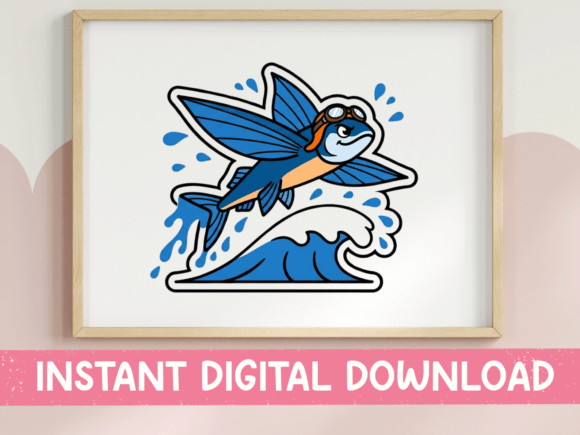
Flying Fish Wave Sticker Design: A Designer's On-Hoop Review
When a new embroidery file lands on my desktop, my first question is never “What is it?” but “Where will it live?” A design isn’t just a collection of stitches; it’s a potential product, a gift, a piece of branded merchandise, or a statement on someone’s favorite sweatshirt. Today, I’m looking at the Flying Fish Wave Sticker Design, thinking through exactly where it might soar and where it could, well, flop—from a purely practical embroidery perspective.
First Impressions: The Mood is Coastal, But the Personality is Bold
My immediate take? This design feels optimistic. A blue flying fish, mid-leap, with those outstretched wing-fins, against a suggested wave backdrop, creates a sense of motion and freedom. The color description—blue fish, brown accents—points towards a natural, almost vintage nautical palette. It’s not a hyper-realistic illustration; it leans into a graphic, sticker-style personality. This is a strength. For embroidery, especially on apparel, overly detailed designs can become muddy when stitched. This one’s clean shapes and suggested details look like they’ll translate well into satin stitches and fill areas without losing clarity.
The theme is clear: ocean, surf, unexpected creatures. It doesn’t scream “holiday” or “baby,” but it has a versatile, all-ages appeal. I imagine it on a custom tote bag for a beach-loving client, or as the central motif on a relaxed, linen apron for a coastal kitchen. The layout, presumably centered around the single fish figure, makes it a straightforward candidate for hoop placement, which is a relief when planning a production run for a craft business.
Real-Life Embroidery Scenarios: Where This Fish Will Fly
Let’s walk through a real case. Say an Etsy seller specializing in personalized gifts gets a request for a unique birthday present for a surfer. They want an embroidered hoodie. The Flying Fish design is a contender. On a mid-weight cotton sweatshirt, with proper stabilizer, this graphic could be stunning. The bold outline and solid color blocks would pop, and the theme hits perfectly. I’d stitch it on the upper back or front pocket area. It feels custom without being overly sentimental—a great gift for a teen or adult.
For small business merchandise, think about a boutique selling handmade goods. A simple, embroidered tea towel or pillow cover with this design could attract a specific customer. It’s more niche than a generic flower, which can be a selling point. As a digital embroidery file, it’s a design asset that allows for consistency across products—the same file could be used for a cap, a tote, and a patch, creating a cohesive line for a small shop.
For baby items or nursery decor, I’d be selective. The design isn’t inherently “cute” in a traditional way, but on a darker, denim baby jacket or a rugged canvas diaper bag, it could work for a family with a seaside lifestyle. It’s more about the parents’ personality than a toddler’s. As an embroidered patch, it’s excellent. Applied to a backpack or jacket, it tells a story.
Handling the Stitch: Practical Considerations for Clean Results
Now, the practical embroidery designer notes. Without knowing the exact stitch count or file formats from the provider, I must advise: always check these first. However, based on the description, I’d anticipate areas of fill stitch for the fish body and likely satin stitch for the wing-fin outlines and wave elements.
On textured fabrics like linen or canvas, this design will look beautifully rustic. On smooth pima cotton for a t-shirt, it’ll be crisp. But on thin or stretchy fabric, the stitch density will be crucial. A dense fill stitch area on a thin tee could cause puckering. Always test on scrap fabric first. For dark fabric backgrounds, those blue and brown thread colors need to have strong contrast; you might consider a slight thread color adjustment to ensure the fish doesn’t disappear into a navy garment.
Small hoop sizes might be a challenge if the design is physically large. Inspect the small details, like the tip of the fins or any tiny wave lines. If they’re too minute, they might not stitch cleanly on a cap’s curved surface or on a textured fabric. Running stitch details are less forgiving than satin stitches on curves.
Where to Be Cautious: Avoiding a Wash-Out
This design, with its likely solid color blocks, should handle frequent washing quite well on stable fabrics, as the stitches won’t be overly delicate. However, on layered garments like a knit sweater, or on very stretchy performance fabric for athletic wear, I’d be cautious. The integrity of the design could break down with stress on the fabric.
For products demanding extreme professionalism, like corporate apparel, this is probably too whimsical. But for handmade presentation, craft fair products, and buyer engagement in a niche market, its unique character is a plus. It sparks recognition—“Oh, a flying fish!”—which is more memorable than a vague abstract shape.
From Digital File to Finished Product: Boosting Value & Trust
Using this design effectively affects product value and customer trust. A clean, well-stitched version on a high-quality tote bag feels premium. A sloppy, puckered version on a cheap tee feels like a disappointment. Your skill in execution, using proper stabilizer and matching thread quality to the fabric, is what turns this digital embroidery file into a sellable finished product.
For commercial embroidery, if the license permits it, this design could be a staple for a decorator serving surf shops or coastal resorts. Its graphic nature makes it suitable for printable mockups in online stores, showing customers a clear preview.
Always, always confirm the licensing before selling finished items or listing the digitized file as a product. Is it for personal use only, or commercial? This is the bedrock of a legal craft business.
Final Design Judgment: A Niche Winner with Broad Appeal
The Flying Fish Wave Sticker Design, from my designer’s point of view, is a strong candidate for specific, mood-driven projects. It creates a cohesive visual personality for a product line. It’s likely to stitch clearly if the file is well-digitized, making it a reliable choice for embroidery projects where clarity matters. It fits best on mid-weight apparel, bags, home decor with a casual vibe, and personalized gifts for a certain lifestyle.
Before hooping it for a client’s custom apparel or for your own small shop merchandise, do your due diligence: test it in black and white mockups to check shape clarity, compare it on light and dark fabric backgrounds digitally, and stitch a sample. See how those brown accents play against the blue. Judge the stitch density for your intended fabric. Then, let this flying fish find its wings on a product that deserves its sense of optimistic escape. For the ocean lover in your customer base, it might be exactly the design that hooks their attention and makes your handmade product stand out in a wave of generic options.